
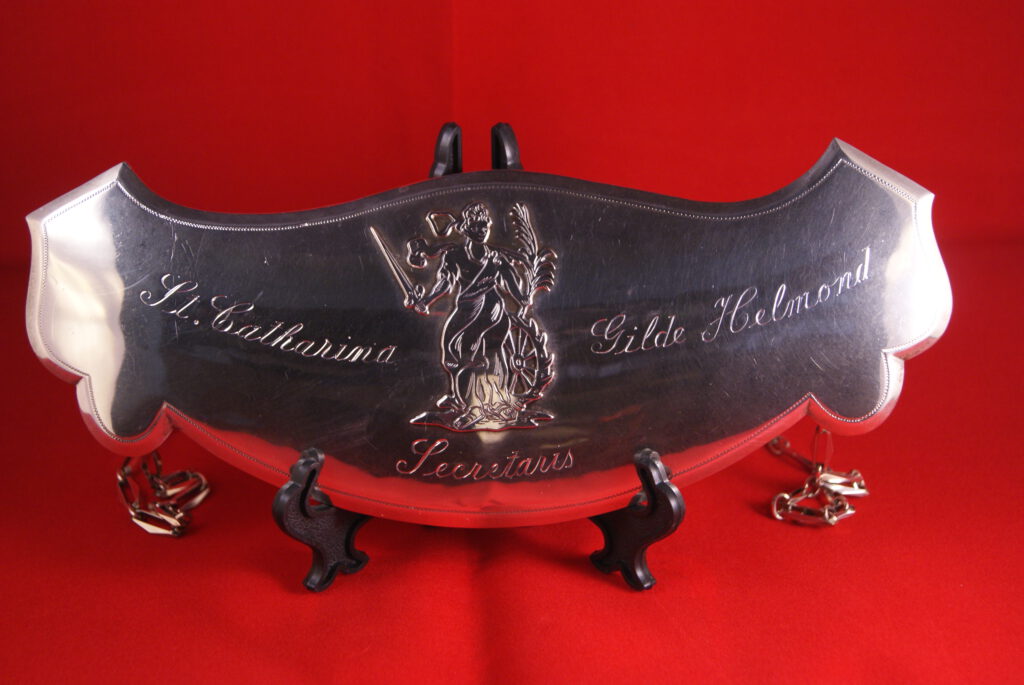
The spijnde
Every year around Ash Wednesday the guild brothers pay their spijnde. In this way the guild keeps a promise to the poor that has rested on it since 1446.
What is the spijnde?
The spijnde, in the past also spelt spynde, is a distribution to the poor. On Ash Wednesday, the start of Lent, the guild hands out bread to people in need. The guild brothers pay for that bread together. This is called paying the spijnde.
How it began: 1446
Since 1446 the guild has had the duty, from the yield of a field on the Hoogeidsestraat, “smaut en olie uit te delen aan den armen purlic om Godswille op den Aschwoensdag”. In plain words: lard and oil for the poor, for God’s sake, on Ash Wednesday.
This makes the spijnde one of the oldest traces of the guild. In that same year, 1446, the brotherhood of Sint Catharina certainly already existed. The distribution first took place in St Lambert’s Church. After the Reformation it was held in an inn.
1968: paid again
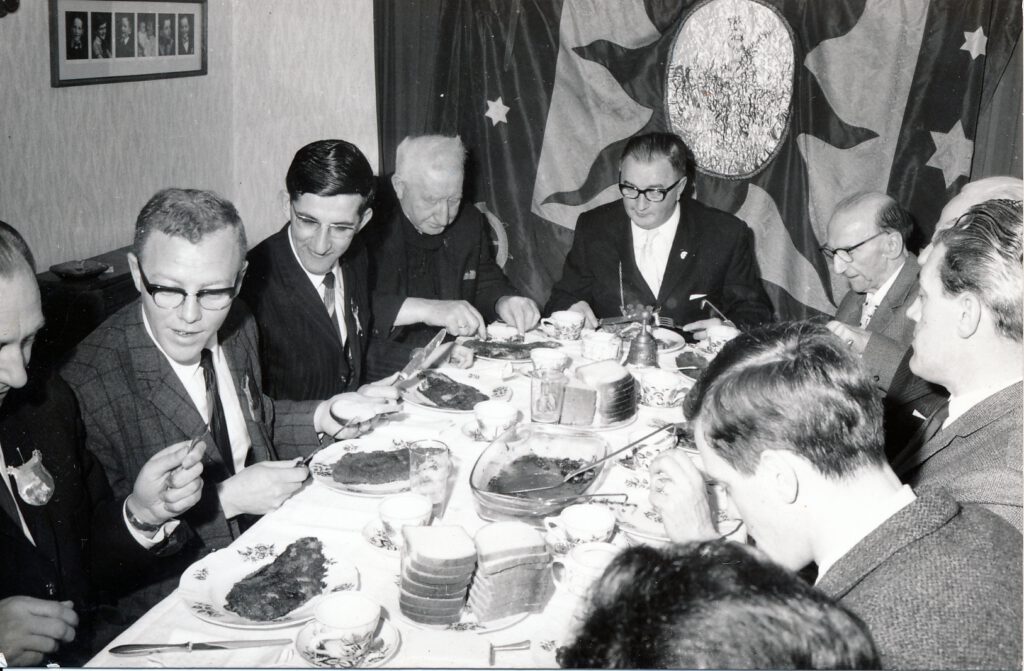
“St. Catharinagilde’s spynde paid again”, the newspaper wrote in February 1968. The day before, loaves had been handed out to families through the parishes of the town. As tradition had it, the guild brothers paid the spijnde at the home of the oude deken (the chairman of the guild), Alphons Niessen.
In the evening they held a fish supper. The fish was supplied by king Sjef van Lierop, who was a fishmonger.
The spijnde today
The tradition is still alive. Under the house rules, on Ash Wednesday the oude deken takes one loaf per guild brother to the Poor Clare Sisters in Helmond or to another Christian charity. Around mid-Lent every brother pays his spijnde for that bread. A simple fish meal follows.
From 2012 to 2018 the oude deken handed the loaves to the Ruilwinkel van Humanitas (a charity shop). “We are always received very warmly there, and the loaves, if only symbolically, are eagerly taken”, the annual report says. Since 2014 the fish supper has been held in the guild’s own guild room. In 2018 the brothers prepared the meal there entirely themselves.
Read more about the guild through the centuries on the History page.